AI in Continuous Improvement: Getting Faster, Could Be Smarter
Over the summer, we conducted research with professionals across our network working in Continuous Improvement (CI), Quality, and Operational Excellence to understand the ways in which AI is being adopted. Our goal was to uncover the enablers and barriers to AI integration in day-to-day operations and to explore the evolving skillsets and capabilities that professionals believe will be essential to remain relevant in an increasingly AI-driven landscape.
We gathered insights from 42 individuals representing a diverse mix of sectors, including manufacturing, public services and service-based industries. Participants held a range of roles, from directors and senior leaders to CI managers, data operations specialists, compliance experts, technical professionals and independent consultants.
This second article based on our findings looks at the effect AI tools and technologies are having on efficiency, quality and impact.
Working faster, or working smarter?
We asked contributors, “How has AI improved your work, if at all?”, with three elements in focus; efficiency, quality and overall impact. These reflect the core goals of our work: doing things better, faster, and with greater value.
Efficiency is where AI shows the strongest perceived benefit, with 32% of respondents reporting significant improvements and 29% reporting moderate gains. Quality improvements are also notable, with 25% of participants citing significant advancements and 34% reporting moderate development. The results for overall impact were more modest, with most respondents reporting moderate (44%) or slight (17%) improvements.
This might not surprise you – gains in efficiency and quality can be relatively easy to identify, as tasks like data analysis, communication and the automation of routine work are directly improved by AI tools and technologies. These improvements are visible and measurable (for example faster turnaround, fewer errors), providing a solid basis for reporting gains.
Overall impact is more difficult to measure. Where we’re referring to business outcomes such as customer satisfaction or strategic success, it’s difficult to attribute progress solely to AI, as there are many factors that influence results. And it’s more difficult if AI is used only occasionally or in isolated tasks. As detailed in our previous article, many respondents are still in the early stages of adoption, reporting individual experimentation or ad hoc team use.
But even when efficiency and quality gains are clear, the real question is whether and how those gains translate into strategic value.
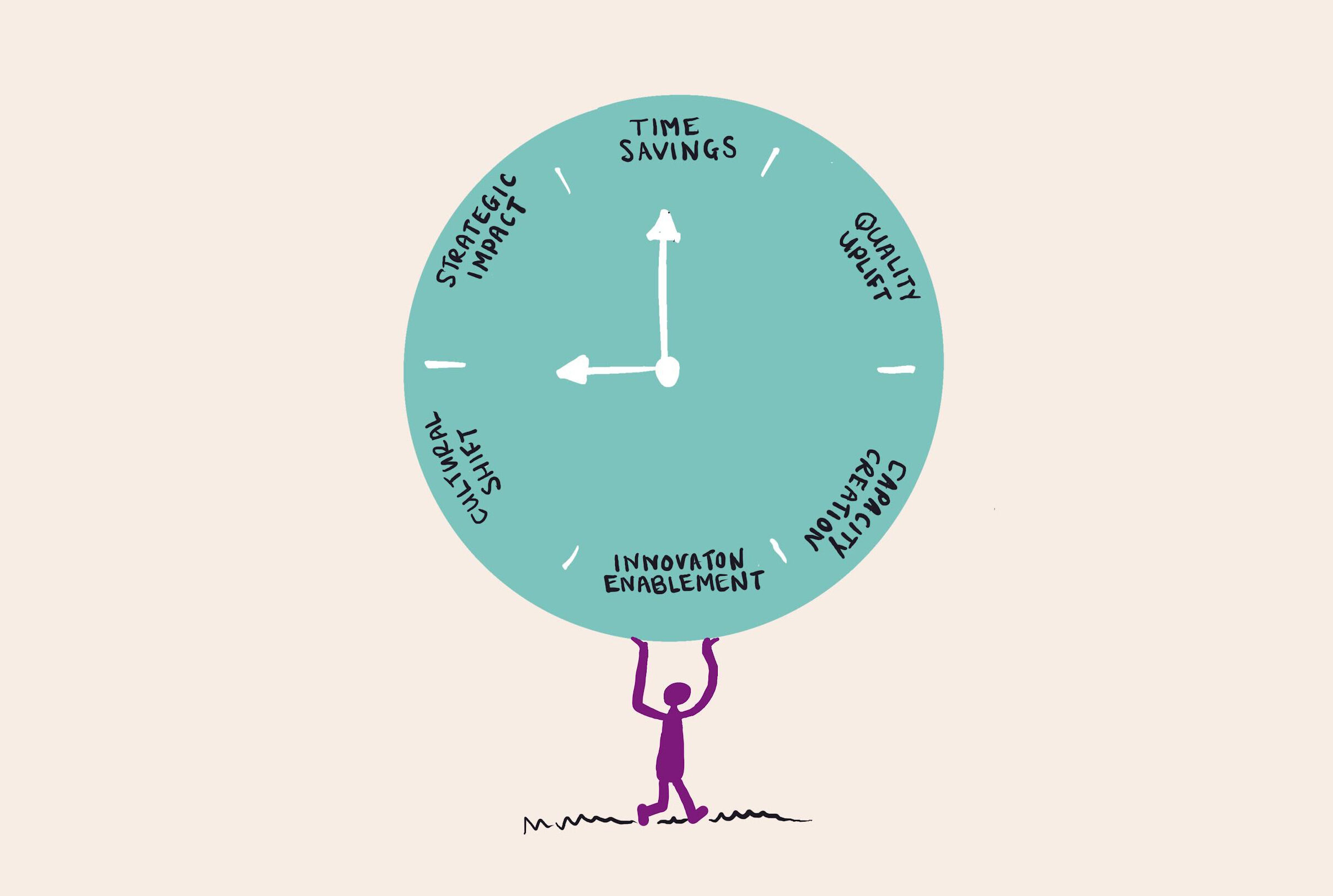
Does this sound familiar? It feels like the age-old challenge for Continuous Improvement, Quality and Operational Excellence practitioners – we can free up the time, but unless that time is reinvested purposefully, the strategic value is lost. For AI, the same principle applies – impact isn’t just about saving effort, it’s about directing that freed capacity toward strategic priorities.
A familiar story
Our data shows a positive correlation between adoption depth and perceived benefits.
Where respondents are using AI at individual experimentation level, there are perceptions of modest benefits across the dimensions of efficiency, quality and impact. Where respondents reported using AI at team level (ad hoc or for pilot projects) perceived benefits are greater, especially in efficiency and quality, indicating that even small-scale structured use can deliver measurable value. Use at organisation-wide integration level shows the highest perceived benefits across all three areas, indicating that scaling AI leads to greater impact.
In the context of Continuous Improvement, Quality and Operational Excellence, we’ve long understood that moving beyond individual efforts toward team-level and organisation wide integration helps us achieve our potential. Now we have evidence that this applies to AI – efficiency gains alone don’t deliver strategic impact unless they’re scaled and connected to broader priorities.
How can we move from gains to impact?
CI, Quality and Op Ex practitioners could consider how to turn the growing understanding of AI into strategic advantage by sharing insights to influence broader decisions, such as product design or supplier strategy. Do you do this? We could also consider how to translate operational gains into customer-facing outcomes like faster delivery or improved quality to create opportunities to enhance brand positioning and market competitiveness. Another possible step could be to begin using AI-driven insights to shape predictive decision-making – using AI not just to analyse what has happened, but to anticipate what is likely to happen, and then acting on those insights strategically. Our data shows that only 12% of the professionals in our sample are using AI for forecasting purposes.
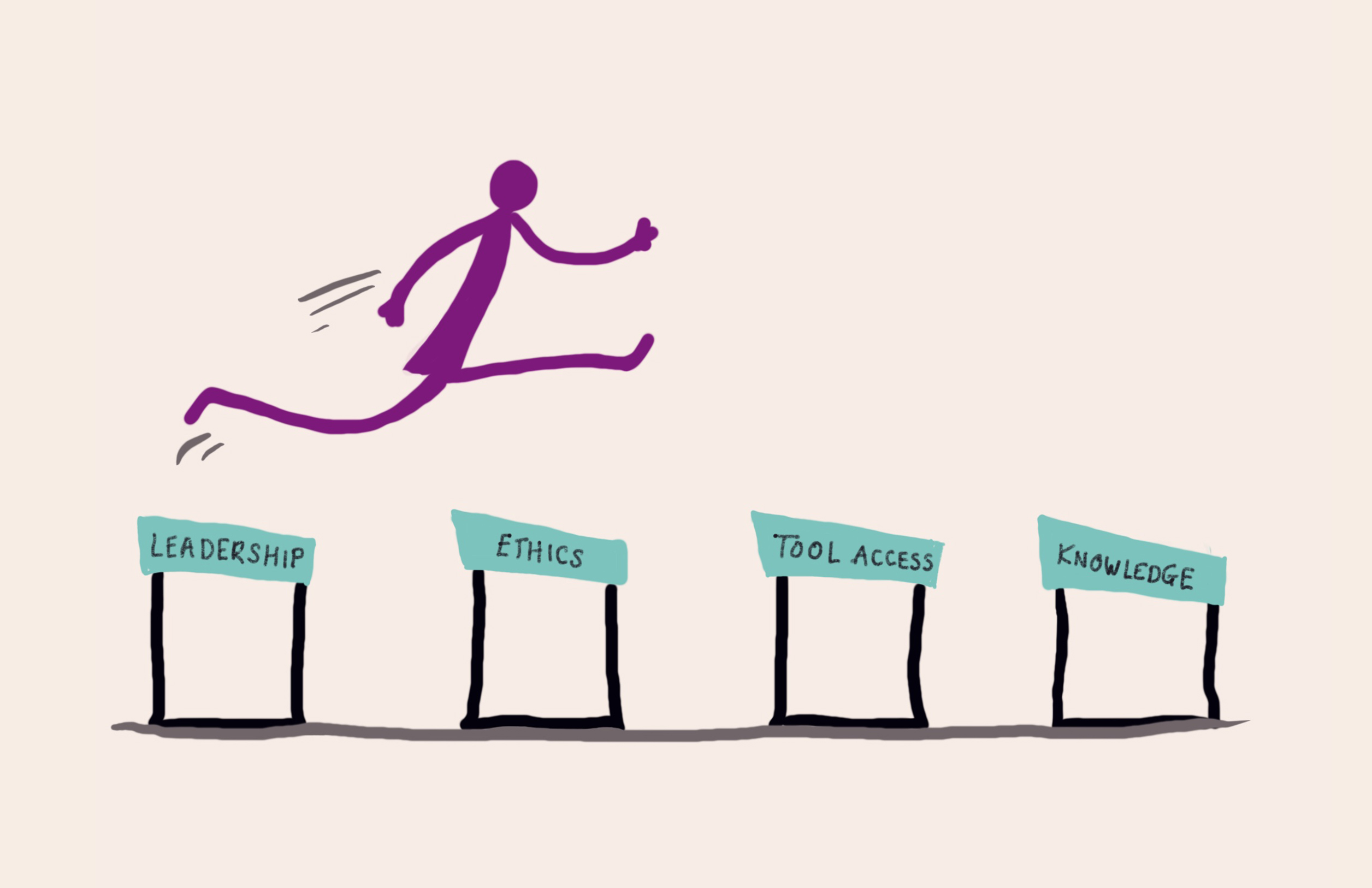
Knowledge gaps, tool limitations and ethical concerns may be presenting obstacles that prevent AI from being used in high-value strategic areas. This limits its ability to drive transformational impact beyond operational improvements. In our next article, we’ll explore the barriers respondents identified, ranging from lack of skills and confidence to unclear governance and leadership, and discuss what can be done to overcome them.
In the meantime, we’d love to hear from you:
- How are you using AI in your CI, Quality or Operational Excellence work?
- How do you measure its impact?
- Is there a strategy for integrating AI into your work?
Sharing real examples helps the whole community learn faster, so if you have a story, tip, or insight, drop it in the comments or message us directly.