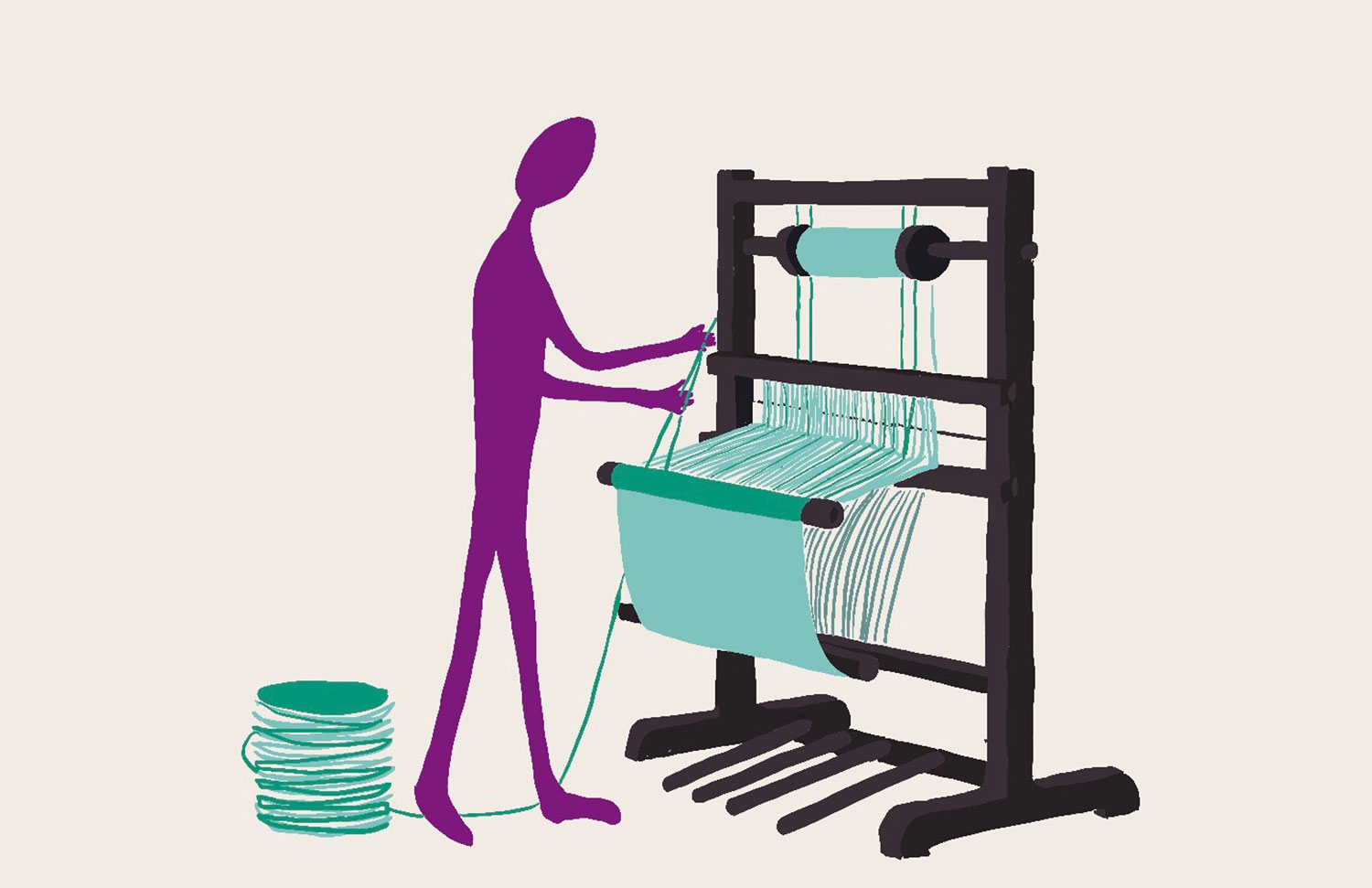
As a young teenager, Sakichi Toyoda observed his mother working long hours weaving cloth by hand. Conditions were harsh: weaving was manual, repetitive, and physically demanding, often requiring women to sit for extended periods in dimly lit rooms, operating looms that were slow and prone to errors. Productivity was low and the work left little time for anything else.
Experimenting with improvements from his early 20s, Toyoda’s breakthrough, the invention of the automatic power loom, was driven by the practical, human-centred goal of relieving his mother and countless other workers from the repetitive, labour-intensive demands of their work.
Toyoda’s success in textile machinery led to the founding of Toyoda Automatic Loom Works and later his principles of automation and efficiency inspired the creation of theToyota Motor Corporation. The philosophy ofautomation with human intelligence (jidoka) became a pillar of the Toyota Production System.
Fast forward to today and AI represents the next chapter in the story. Just as the power loom automated manual weaving, AI can automate data-heavy, time-consuming tasks such as analysing process data or predicting maintenance needs. But the goal is not to replace human insight; it’s to amplify it. When AI takes care of routine analysis, we the human can focus on strategic decisions, customer experiences and solving problems creatively.
The principle of jidoka (automation with human intelligence) is in play. It’s not about automating tasks, it is about giving machines the intelligence to spot abnormalities so people can step in where their judgment matters. Instead of detecting a broken thread on a loom, AI can detect anomalies in process data, highlight risks or signal where attention is needed. That’s where the human advantage kicks in, as we use our knowledge, experience and talents to we use our knowledge and experience to respond. The pattern is the same – technology handles the processing, humans handle the meaning.
Over the summer we asked professionals in our network, “what is uniquely human in Continuous Improvement, Quality and Operational Excellence that you believe AI will never replicate?” Their answers featured empathy and human connection, tacit knowledge and practical experience, leading change, judgement and decision making in ambiguity, intuition, and creativity. Many commentators referenced that these things are key to building trust and to “bringing people with us” when it comes to making successful and lasting improvements.