Lean Six Sigma belt levels are used to distinguish the different levels of Lean Six Sigma training that can be obtained.
The use of ‘Belts’ to describe the hierarchy within Six Sigma originated in Motorola, and it was Mikel Harry who originally described practitioners using the ‘belt’ convention applied in martial arts. If you’re not particularly fond of it, note that Harry initially described Six Sigma trained people as “process characterisation experts” which you must admit, is less appealing!
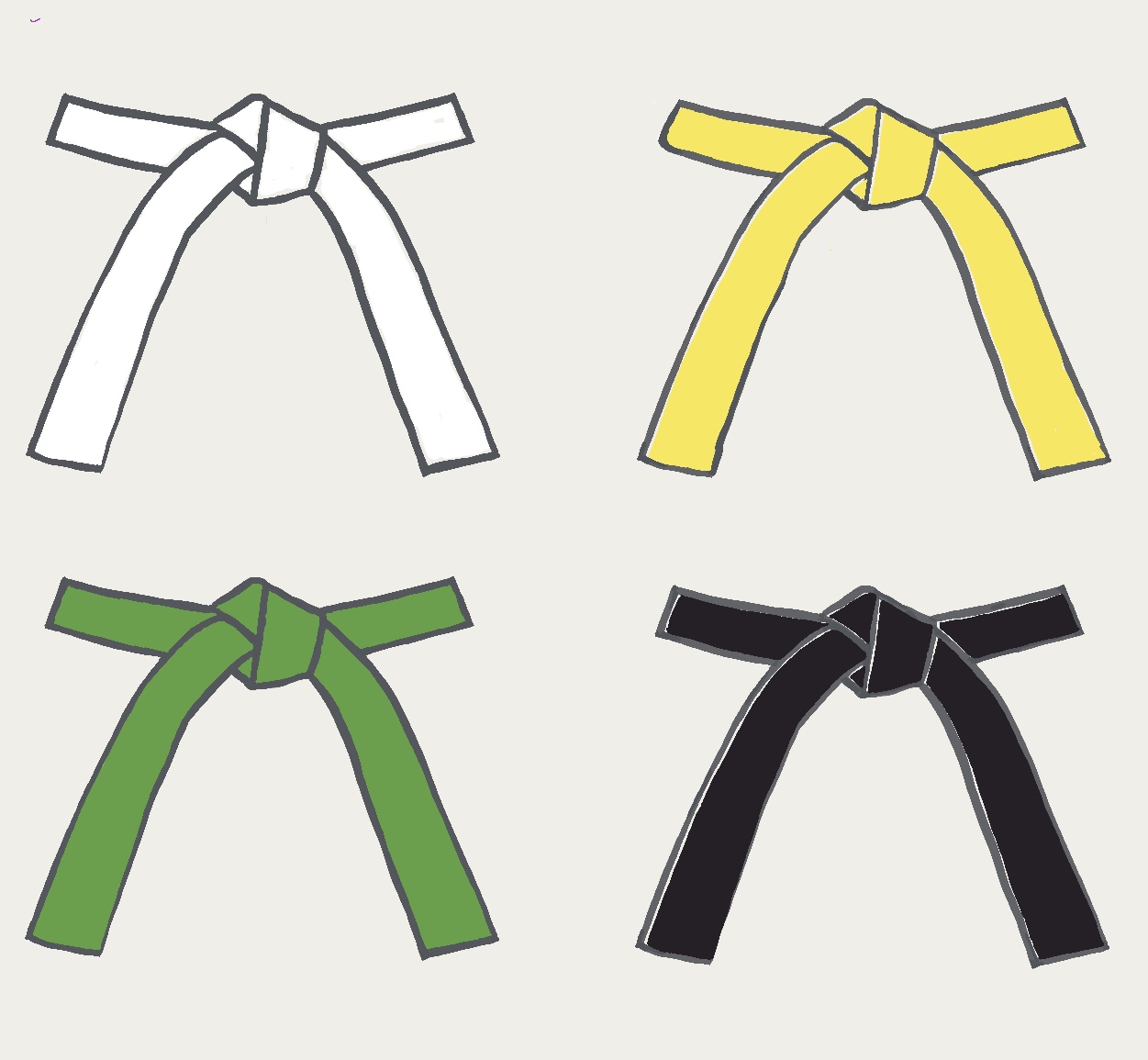
As in martial arts, different coloured belts are used to represent different levels of experience and achievement, from white up to black, and beyond.
Whilst the system is subject to some variation, and some organisations use additional colours, an overview is presented below. It is not always necessary to progress from one level to the next – some people go straight to Yellow or Green Belt, but we do recommend completing Green Belt training before progressing to Black Belt or Business Black Belt level.
White Belt
- Provides awareness of Lean Six Sigma
- Introduces the approach and principles used for Lean Six Sigma
- From 1 hour to a full day of training
- Often inspires people to undertake more Lean Six Sigma training
White belt training provides an awareness of Lean Six Sigma, an introduction to the approach and importantly, the principles which support it. It aims to demystify it and tackle some of the jargon that Lean Six Sigma brings. Depending on the requirements of the organisation White Belt training can last from an hour up to a full day.
White Belts make a valuable contribution to Continuous Improvement. They can identify opportunities, provide input to project teams and apply the concepts to their own work, e.g. by identifying waste. White Belt training often inspires people to become more involved in Lean Six Sigma work.
Discover our White Belt Course
Lean Six Sigma Yellow Belt*
- Uses the DMAIC approach
- Includes the vital tools and techniques used in a majority of projects
- Up to 2 days of training
- Training can be used to make small scale improvements to a business
Yellow belt training takes up to two days. It uses the DMAIC approach as its structure and includes the vital few tools and techniques used in the majority of projects
Yellow Belts can also apply the learning to make small scale improvements within their business areas running mini DMAIC projects. They can also make a solid contribution to projects of broader scope and scale
Discover our Yellow Belt Course
Lean Six Sigma Green Belt*
- Uses the DMAIC approach
- Focuses on applying Lean Six Sigma to lead and deliver improvement projects
- Includes emphasis on people, change and AI
- 5 – 6 days of training
Green Belt training covers a wider range of tools and techniques than Yellow Belt training, at a deeper level. The focus is on applying Lean Six Sigma to lead and deliver an improvement project.
The programme also includes people and change focus, as Green Belts bring people together and encourage collaboration and participation.
Discover our Green Belt Course
Advanced Green Belt
- Focuses on tools for process measurement and data analysis
- 2 advanced modules: Data Driven Insights and Decisions and Further Process Measurement and Analysis Techniques
- Further 6 days of training on top of the Green Belt Programme
Green Belts requiring more training on the use of statistical tools, working in technical roles or in ‘data mature’ organisations benefit from Advanced Green Belt training, which includes modules on process measurement and data analysis.
Discover our Advanced Green Belt Course
Business Black Belt*
- Further tools and techniques with focus on strategic improvement and transformation, including data analysis, agility and digital-enabled Continuous Improvement
- Additional training in strategic change leadership, digital transformation and high-performance teamwork
- Up to 21 days of training
- Business Black Belts lead organisation-wide improvement and transformation programmes while fostering a culture of innovation and adaptability
Business Black Belt training can take up to 21 days, depending on the level of previous training. It includes further tools and techniques, with a focus on integrating process excellence with business agility, digital capability and strategic transformation. There is greater emphasis on using data-driven decision-making and change leadership to accelerate strategy implementation and deliver sustainable business outcomes. It also includes additional training in digital transformation and high-performance teamwork, recognising that these capabilities are fundamental to making improvements successful at scale.
In some organisations, Business Black Belts work full time leading operational excellence, transformation and digital improvement initiatives across multiple functions. In other organisations, they undertake the role alongside their leadership responsibilities. They are responsible for driving Continuous Improvement, aligning improvement activity to strategic objectives and fostering a culture of innovation, adaptability and continuous learning throughout the organisation.
Discover our Business Black Belt Programme
Lean Six Sigma Black Belt
- Further tools and techniques with deeper focus on statistical and analytical methods
- Up to 18 days of training
- Lean Six Sigma Black Belts lead complex projects and coach and mentor Green Belts
Black Belt training can take up to 18 days. It includes further tools and techniques and more focus on the use of statistical and analytical methods to measure and interpret the performance of processes. It also includes additional training on Change Management as this is fundamental to making process improvement successful.
In some organisations, Black Belts work full time for two or three years on process improvement projects, tackling the more complex issues. In other organisations they take on the role as a part-time responsibility alongside their ‘day job’. They also coach and mentor Green Belts.
Discover our Black Belt Programme
Master Black Belt Certification
- Full time career option
- Can coach Black Belts and carry out Lean Six Sigma training
- Will have been Black Belts for several years with practical experience
- Work closely with senior executives
Master Black Belts are a little different because this is more of a professional role, seen as a full-time career option which a Black Belt might aspire to if they are particularly excited by the idea of becoming ‘professional change agent’. Master Black Belts will have several years of practical experience as a Black Belt or Business Black Belt. Certification is awarded based on a personal, assessment based programme, which may require further training to be undertaken to address any gaps. MBBs can coach Black Belts and carry out Lean Six Sigma training. They also carry out a strategic guiding role, working closely with their leadership teams on the deployment of Lean Six Sigma.
Discover Master Black Belt Certification
*Catalyst Consulting Lean Six Sigma Yellow, Green and Business Black Belt training programmes are supported by CatStat, Catalyst’s revolutionary AI powered process analysis and improvement tool. CatStat uses the power of AI to help uncover the business insights locked inside business data and accelerate problem solving. CatStat licenses are included in the training package, featuring access for 12 months.
Certification
Organisations using Lean Six Sigma do not have to adopt the ‘Belt’ terminology of course – some organisations prefer instead to talk about their trained resources as Guides, Practitioners or Champions. The Belt system is widely known and used however, and the knowledge and experience gained from learning about and applying Lean Six Sigma is highly transferrable.
In addition to learning about and applying Lean Six Sigma there is the opportunity for people who have been trained to become certificated. It is subject to some variation among providers in the marketplace, but for a recognised, accredited certification (the BQF standard for example) for Yellow, Green and Black Belts there is typically a simple three step process to follow.
- Complete the relevant training programme
- Pass the exam
- Present evidence of the application of Lean Six Sigma
Certification to Lean Six Sigma Master Black Belt takes a different route and is based on assessment of the experience of the applicant and their portfolio of evidence.
The benefits for the individual include recognition, consolidation of the training experience, and the development of confidence and competence that the opportunity brings. For the organisation there are also numerous benefits – as well as being on the receiving end of the financial and operational benefits that process improvement brings, organisations can exploit the development and recognition opportunities and build on these as maturity increases.
Whether you’re looking to understand the basics, lead improvement projects or drive organisation-wide transformation, there’s a Lean Six Sigma Belt to match your goals. Choosing the right programme depends on your current experience, role and the level of impact you want to make. If you’re unsure where to start, we’re happy to help you identify the most appropriate training pathway.
Explore our Lean Six Sigma training programmes or contact us for advice on the best route for you or your organisation.